The specter of El Nino continues in the coming months, and extreme phenomena are increasing alarmingly
Weather of Arabia - The tropical region of the Pacific Ocean entered under the influence of the "El Niño phenomenon" several months ago, as temperatures rose by more than one degree Celsius in the tropical waters of the eastern Pacific Ocean near the northwestern coasts of the South American continent. According to the specialized global dynamic and statistical models, the world is heading towards a "strong El Nino" with a high probability in the coming months.
And El Nino is one of the most important weather phenomena in the climate, which has been statistically proven to affect the atmospheric pressure system in the world, because of its impact on the movement of the atmosphere starting from the equatorial region over the Pacific Ocean, and then these changes are transmitted to large air masses, and later this is reflected in weather phenomena in different regions of the world.
El Niño is considered among the most dangerous climatic phenomena, because it affects the atmosphere greatly, and causes floods, droughts, heat and cold in different regions of the year, where cold and hot air begins to be concentrated in certain areas of the year more than usual, which leads to the occurrence of extremes, and this means that the rotational movement of the atmosphere suffers from some imbalance and turbulence, which negatively affects the weather in different regions of the world.
El Nino and its relationship to extreme heat waves
Southern Europe and the Maghreb are swept by a severe heat wave, as a result of which temperatures have risen to record levels in some European cities such as Rome and Catalonia. China and the southern United States have also witnessed some records being broken.
Regarding the association of heat waves with the El Niño phenomenon, specialists in the Arab Weather Center said that the El Niño phenomenon causes a rise in temperatures in a large part of the atmosphere as a result of its direct impact on the circulatory movement of air in the tropics, where warm ocean surfaces lead to an increase in ascending currents / low pressure, and this corresponds to an increase in descending air with high pressure to the east of it accompanied by the thermal dome.
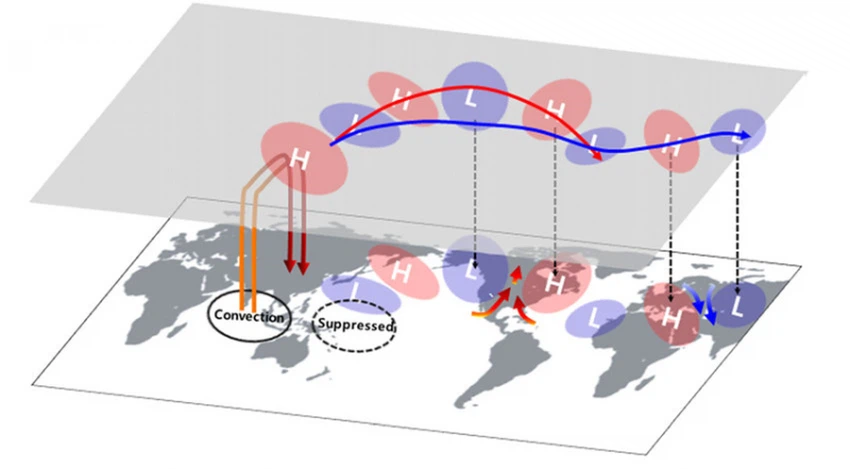
But the relationship is not that easy, as dozens of other global climatic factors are involved in building and regulating the atmosphere, and these factors are taken into account by the weather forecast staff in "Arab Weather" in issuing quarterly bulletins.
Browse on the official website