
 English
A heat dome will affect 7 Arab countries for the first time in September.

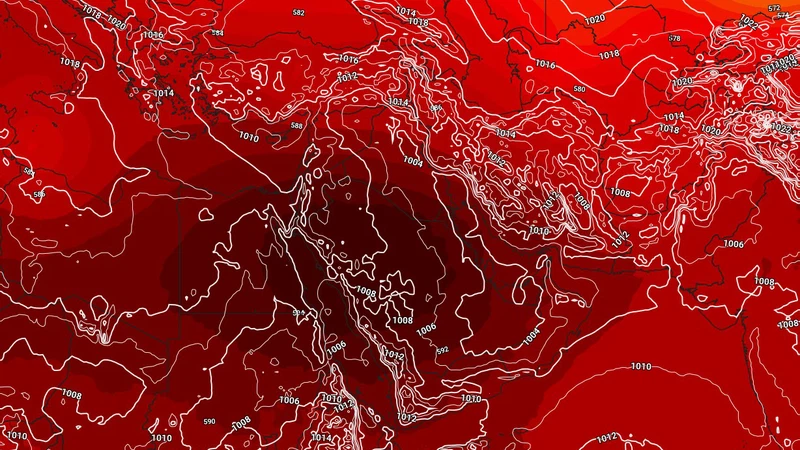
Arab Weather - Computer maps at the Arab Weather Center indicate the development of a so-called heat dome over several countries in the Arabian Peninsula in mid-September 2025. Experts at the Arab Weather Center explained that the high pressure system in the upper atmosphere will intensify by mid-month, enough to form a heat dome affecting the region, but it will be much weaker than the one that forms during the peak of summer.
Expected temperatures in the Arabian Peninsula
Temperatures are expected to be above average for this time of year next week, with hot, summer-like conditions across the Arabian Peninsula. The high pressure system's effects will affect Iraq, Kuwait, Saudi Arabia, and Yemen, while the high pressure system will extend to Bahrain, Qatar, and the UAE at a lesser intensity.
In contrast, the Levant is expected to experience relatively hot weather until the beginning of next week, followed by a drop in temperatures, despite any direct impact from the heat dome. Arab Weather experts confirm that the weather conditions these days are completely within the normal range for this time of year, and that any rise in temperatures will remain within the Levant's normal climatic range.
And God knows best.


Arabia Weather App
Download the app to receive weather notifications and more..