Emirates | A slight drop in temperatures in the north at the end of the week, and the country will be affected by an eastern wave extending in the medium term. Details
Arabia Weather - Weather forecasters at the Arabia Weather Center said that the latest outputs received from computer numerical models indicate that the country will witness a slight drop in temperatures over the weekend, especially the northern cities, including the capital, Abu Dhabi, with the appearance of medium and high clouds. Specialists are also monitoring the indicators reported on... The medium term indicates that the UAE will be affected by an eastern wave that will increase the probability of rain in the east and south of the country, including the city of Al Ain.
In detail, temperatures tend to drop slightly, and the weather is hot to very hot summer on Friday and Saturday, with maximum temperatures approaching the mid-40s in the interior areas of the country. Clouds appear at medium and high altitudes, with moderate northwesterly winds blowing that are sometimes active and may It causes dust in indoor areas.
See the temperatures and weather conditions in the capital, Abu Dhabi, here
Under Watch: An eastern wave will extend next week, with the chances of thunderstorms increasing over the eastern mountains and the south of the country.
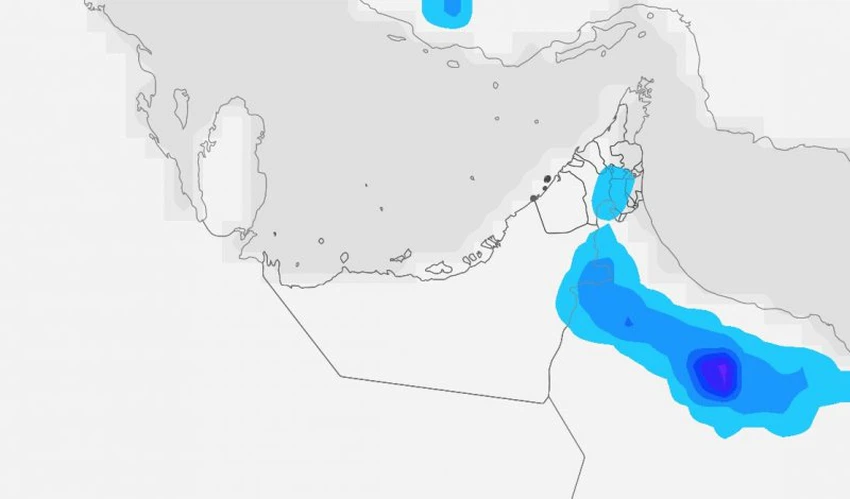
For their part, weather specialists at the Arabia Weather Center said that the latest computer data received by the Air Control Center indicate that there are indications that the Emirates will be affected during the next week, especially its end, by an extension of an eastern wave that will cause the return of seasonal thunderstorm activity on the eastern mountain ranges (especially Sharjah) and the neighboring and southern regions, such as The city of Al Ain and the accompanying rain, which may be heavy, hail, and falling winds that cause dust waves to form.
An easterly wave is a type of atmospheric groove, a long area of relatively low air pressure, oriented north to south, that moves east to west across the tropics, causing areas of cloudiness and thunderstorms. In other words, they are disturbances in the low and middle layers of the atmosphere through which the eastern trade winds pass north of the equator.
Tropical waves are formed in the easterly flow along the equatorial side of the subtropical ridge or high air pressure belt that lies north and south of the Intertropical Convergence Zone (ITCZ). Tropical waves are usually transported westward by prevailing easterly winds along the equatorial and subtropical regions near the Leveling. It can lead to the formation of tropical cyclones in the North Atlantic and Northeast Pacific basins.
God knows.
Browse on the official website