
 English
The Hajj season continues its gradual transition from the heat of summer to the coolness of winter.


Arab Weather - The Hajj season is linked to the Islamic calendar, which is approximately 10 to 11 days earlier than the Gregorian calendar. This time difference causes the Hajj season to shift gradually through the four seasons roughly every 33 years, directly impacting the weather and conditions for performing the rituals.
While in previous years the Hajj season coincided with the peak of summer, with temperatures approaching 50 degrees Celsius in Mecca in some years, this year’s Hajj season, 1447 AH (2026 AD), is the last Hajj season to coincide with the hot summer weather. Starting next year, the Hajj will begin to move to late spring and then winter, which means a gradual decrease in temperatures associated with performing the rituals.
This time change represents a significant shift in the climatic conditions associated with Hajj. In the coming years, as Hajj approaches winter, weather conditions are expected to become more moderate, which will positively impact the comfort and safety of pilgrims, especially given the health challenges related to heat stress.
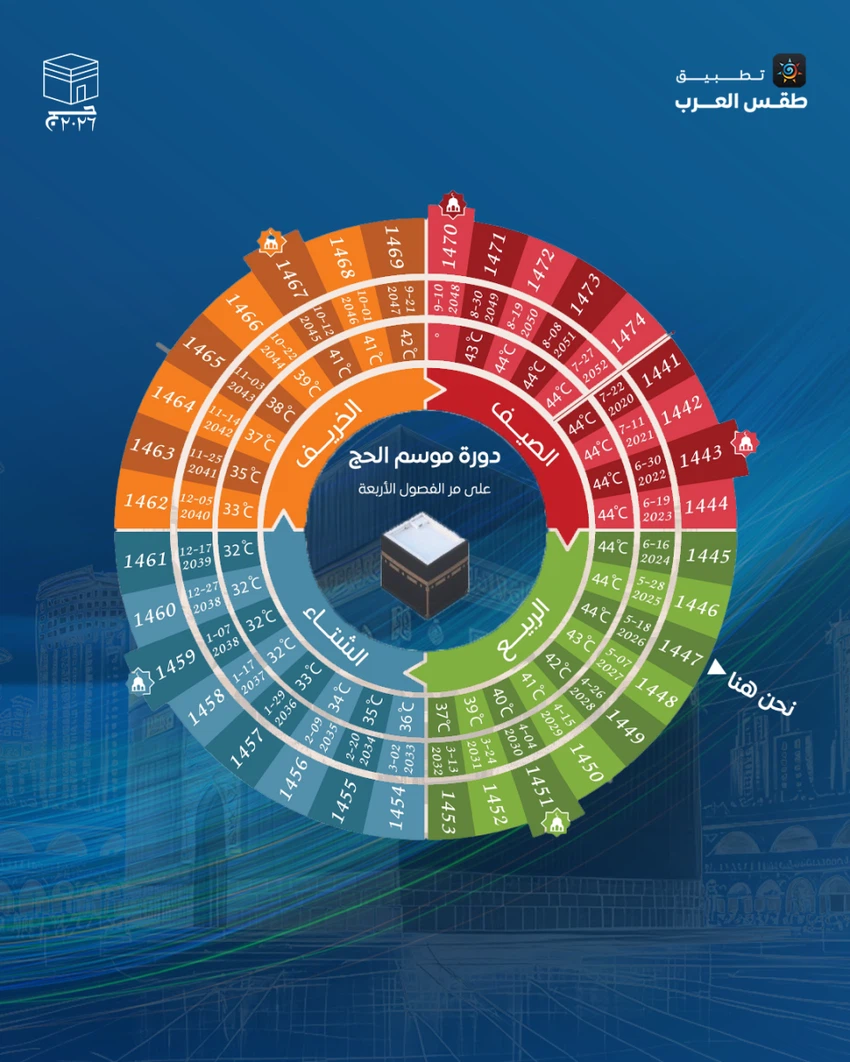
As the Hajj season continues to move towards cooler seasons, the importance of early planning and consideration of the expected weather each year becomes apparent, as each season requires special preparations that vary according to the prevailing weather conditions.
Good preparation and an understanding of the relationship between the Islamic calendar and the climatic seasons are two essential elements to ensure a successful and safe Hajj season in the coming years.


Arabia Weather App
Download the app to receive weather notifications and more..