
 English
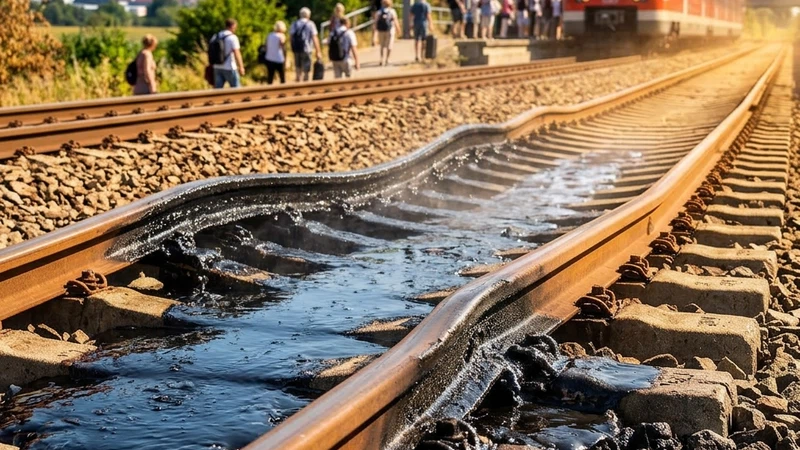
Shock in Germany: Record-breaking heatwave melts railway components and disrupts train traffic

Several European countries are experiencing an unprecedented heat wave, considered among the most severe in the continent's history, with temperatures rising to record levels exceeding 41 degrees Celsius in a number of regions, amid warnings of the continued widespread impact of the hot air mass.
This wave caused major disruptions to infrastructure, transport and energy sectors, at a time when experts confirm that what is happening reflects the accelerating effects of climate change on Europe.
Unusual scenes: Water cannons used to combat the heat in Berlin
In the German capital, Berlin, authorities resorted to exceptional measures to mitigate the effects of the extreme heat, with police using water cannons usually reserved for dealing with riots to spray water mist on citizens and tourists in vital locations, including the Brandenburg Gate, Potsdamer Platz and the area surrounding the Reichstag building, in a scene described as unprecedented and reflecting the severity of the current heat wave.
Railway tracks melt in Leipzig, disrupting train traffic.
In the eastern German city of Leipzig, high temperatures caused a partial paralysis of train traffic after the insulating material used between the railway tracks and the asphalt melted, resulting in the formation of sticky materials that hindered train movement and forced authorities to temporarily suspend service.
The operators explained that maintenance work began immediately to rehabilitate the damaged lines, in an incident that highlights the vulnerability of some infrastructure elements to extreme heat waves.
Roads are melting under an extreme heatwave in Germany as Europe faces record breaking temperatures
Climate change is making extreme weather more severe, and recent natural disasters are a reminder that our planet is constantly changing. Whether driven by natural cycles or human… pic.twitter.com/10NfNrWqVl
- Surajit (@surajit_ghosh2) June 28, 2026
Highways crumble under record temperatures
The damage was not limited to the railways, as some highways in Germany, especially the (A2) road, witnessed cracks and bulges in the asphalt as a result of thermal expansion, which caused damage to more than 20 vehicles and the closure of parts of the road to traffic, with initial estimates of losses in the tens of thousands of euros.
Why does infrastructure in Europe collapse during heat waves?
Experts believe that much of Europe's infrastructure was designed during decades when the climate was colder and more stable, with engineering standards focusing more on frost and cold resistance than on withstanding extreme heat waves.
With the increasing frequency of heat waves and record-high temperatures, transport networks, roads and railways are under increasing pressure, forcing a re-evaluation of design methods and materials used.
Climate change intensifies extreme weather events
Climate experts confirm that global warming resulting from climate change is contributing to an increase in the frequency and intensity of heat waves in Europe, making such events more likely in the future, and placing infrastructure before unprecedented challenges that require urgent solutions to adapt to the new climate reality.


Arabia Weather App
Download the app to receive weather notifications and more..